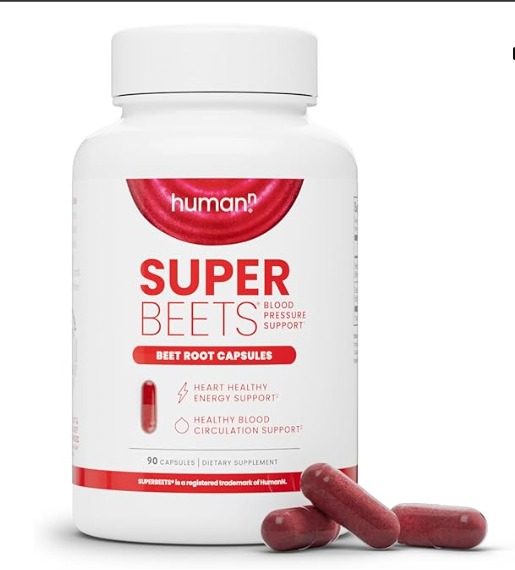
Super Beets - Blood Pressure Support
Price
Ksh3299.00
A concentrated Beta vulgaris (beetroot) extract supplement designed to enhance endogenous nitric oxide (NO) production through dietary nitrate conversion, supporting cardiovascular hemodynamics, vascular compliance, and metabolic efficiency
Key Benefits
- Beetroot (Beta vulgaris) is exceptionally rich in inorganic nitrates (NO3) — the natural food compound that is converted in the body through a stepwise biochemical pathway: dietary nitrate is first reduced to nitrite (NO2) by commensal bacteria on the tongue, and nitrite is then converted to nitric oxide (NO) under the acidic conditions of the stomach — completely bypassing the need for eNOS enzyme activity (the endothelial nitric oxide synthase pathway).
- This alternative nitrate-nitrite-NO pathway is particularly significant because it provides nitric oxide production that is independent of endothelial function — meaning beetroot supplementation can elevate NO levels even in individuals with impaired endothelial function (common in hypertension, diabetes, and aging) where the eNOS pathway is compromised.
- Elevated nitric oxide activates soluble guanylate cyclase in vascular smooth muscle cells, increasing cyclic GMP (cGMP) production. cGMP activates protein kinase G, which phosphorylates myosin light chain kinase and reduces its activity — causing smooth muscle relaxation and arteriolar dilation. The net result is a measurable, dose-dependent reduction in both systolic and diastolic blood pressure.
- Supports heart health and energy: the improved oxygen delivery to tissues from enhanced vascular tone and blood flow reduces the work the heart must perform to maintain adequate perfusion pressure (afterload reduction). This is the same mechanism by which clinical nitrate medications (isosorbide dinitrate, GTN spray) support heart function — beetroot provides this via nutritional means.
- Athletic performance enhancement: beetroot's NO-mediated vasodilation improves oxygen efficiency in skeletal muscle — specifically, it reduces the oxygen cost (VO2) of submaximal exercise, meaning the same workload can be achieved with less oxygen consumption. This is the ergogenic mechanism behind beetroot's widespread adoption by endurance athletes globally.
- Betalains — the red-purple pigments (betacyanins) unique to beetroot — are themselves potent antioxidant and anti-inflammatory phytocompounds. Betanin and isobetanin neutralize reactive oxygen species, reduce NF-kB inflammatory signaling, and protect LDL cholesterol from oxidative modification — a key step in atherosclerotic plaque formation.
- The concentrated capsule format eliminates the high sugar content associated with beetroot juice consumption (a significant consideration for diabetic or low-sugar dieters) while delivering a standardized nitrate dose. Each serving is equivalent to consuming multiple whole beets — quantities impractical to achieve through food alone.
Recommended Usage
Scientific Backing
- Blood Pressure Reduction: A landmark meta-analysis in the Journal of Nutrition (Siervo et al., 2013) covering 16 RCTs found dietary nitrate/beetroot supplementation reduced systolic blood pressure by 4.4 mmHg and diastolic by 1.1 mmHg — a reduction clinically comparable to low-dose antihypertensive medication and associated with a 10% reduction in cardiovascular event risk at population level.
- Exercise Performance: The definitive study by Larsen et al. (Cell Metabolism, 2011) showed dietary nitrate supplementation reduced the oxygen cost of submaximal exercise (improved exercise efficiency) by approximately 19% — one of the largest ergogenic effects documented for any nutritional intervention. This effect has been replicated in over 40 subsequent studies.
- Nitrate-Nitrite-NO Pathway: A seminal paper by Lundberg and Weitzberg (Nature Reviews Drug Discovery, 2012) comprehensively established the dietary nitrate pathway to NO production, confirming that salivary bacteria are essential intermediaries and that antibacterial mouthwash abolishes the blood pressure response — proving the bacterial conversion step is mandatory.
- Endothelial Independence: Research confirms that the dietary nitrate pathway produces NO under hypoxic (low oxygen) and acidic conditions where the NOS enzyme pathway is impaired — making beetroot supplementation particularly valuable for patients with endothelial dysfunction (Modin et al., Acta Physiologica, 2001).
- Betalains and Antioxidant Activity: A 2016 study in Nutrients confirmed beetroot betalains have a free radical scavenging capacity 2-fold greater than quercetin and comparable to Vitamin C, with documented anti-inflammatory effects including inhibition of COX-1 and COX-2 enzymes (the same targets as aspirin and ibuprofen).
- Cardiovascular Risk Markers: A 2012 RCT in Hypertension (Kapil et al.) found that a single dose of dietary nitrate (equivalent to 250g beetroot) significantly improved endothelial function (measured by flow-mediated dilation), reduced arterial stiffness (pulse wave velocity), and lowered blood pressure — all within 3 hours of ingestion.